Click Here to Watch LIVE on YouTube
Thursday, August 27, 2026
11:00 a.m. – 12:00 p.m. / Eastern Time
Registration is NOT REQUIRED to view the program.
Submit questions to the specialists: questions@ncusar.org
Background and Context
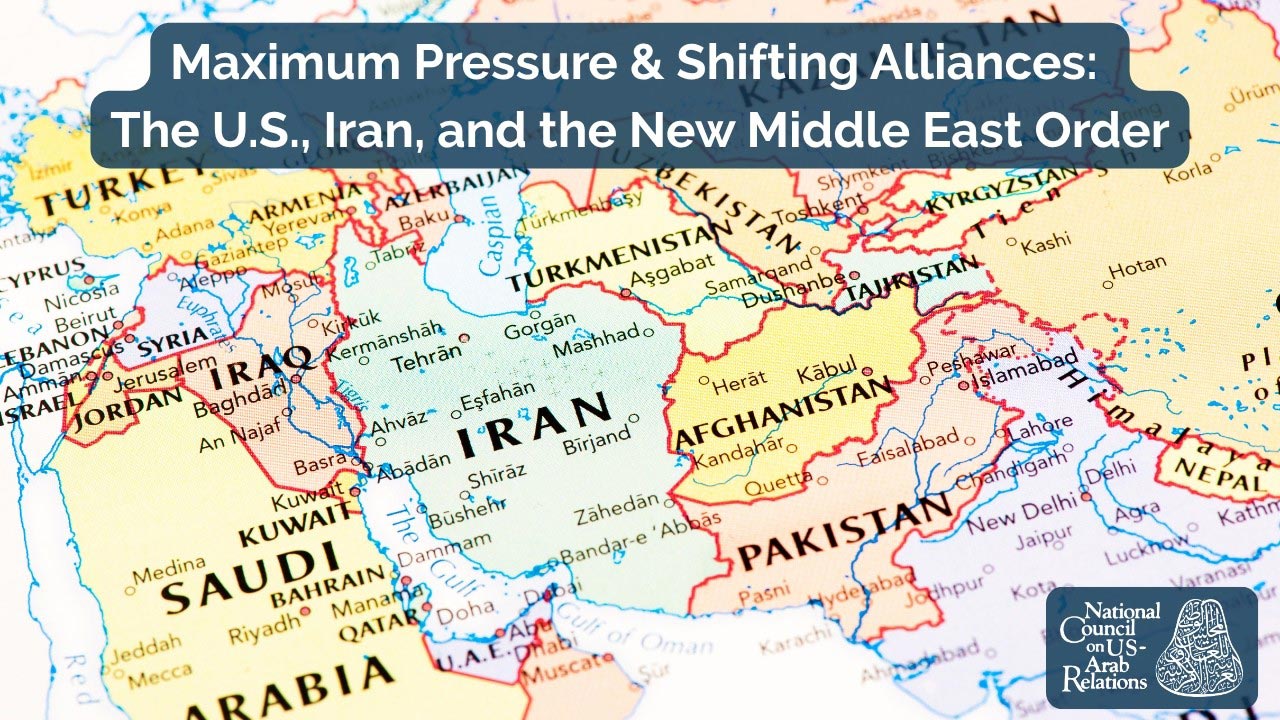
The United States is entering a new and potentially decisive phase of its “Maximum Pressure” campaign against Iran, combining intensified economic sanctions, financial isolation, restrictions on Iran’s oil exports, and continuing military pressure. With Iranian oil exports to China falling sharply and Washington threatening the toughest sanctions yet, the central question is whether economic coercion can force Tehran to make strategic concessions—or instead drive the conflict toward prolonged confrontation.
At the same time, Iran is facing a critical test of its economic resilience and military capacity. Tehran is seeking ways to circumvent sanctions, preserve its oil revenues, and maintain its regional leverage while resisting U.S. demands. As Washington seeks to translate military gains into political leverage, the webinar will examine whether the current strategy can produce an Iranian capitulation, a negotiated settlement, or an even more dangerous cycle of escalation.
Beyond the U.S.-Iran confrontation, the Middle East is witnessing an important realignment of regional power. The new defense agreement between Saudi Arabia, Türkiye, and Pakistan, signed in Mecca on August 7, signals a growing willingness among major regional powers to develop new mechanisms of collective security and strategic autonomy. The webinar will explore what this emerging alignment means for Iran, the Gulf, Israel, the United States, and the future architecture of security in the Middle East.
Welcoming and Introduction:
- Dr. Fadi Hilani, Director of the Levant and Middle East Area Studies Program, Senior Academic and Research Fellow-in-Residence, National Council on U.S.-Arab Relations | Bio
Moderator:
- Dr. Abderrahim Foukara, Distinguished Fellow for U.S.-Arab Affairs and Media Leadership, National Council on U.S.-Arab Relations; Former Washington D.C. Bureau Chief, Al Jazeera | Bio
Speakers:
- Dr. Abdulaziz Sager, Founder and Chairman, Gulf Research Center | Bio
- Dr. Thomas Mattair, Middle East Historian and Scholar; Former Executive Director, Middle East Policy Council | Bio
- Dr. Kristian Coates Ulrichsen, Fellow for the Middle East, Rice University’s Baker Institute for Public Policy; Co-Director, Middle East Energy Roundtable | Bio