King Faisal Center for Research and Islamic Studies
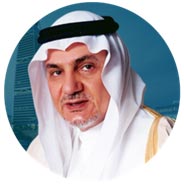
Keynote Remarks by HRH Prince Turki AlFaisal
National Council on U.S.-Arab Relations — The 34th Annual Arab-U.S. Policymakers Conference
20 November 2026 | Washington, DC
In the Name of God the Merciful, the Compassionate. May God’s Peace and Blessing be upon you.
Thanks, John Pratt, for your kind invitation. My thanks also go to your staff and colleagues for their tireless efforts in organizing this event throughout the last 33 years. Pleasure being with you again, Pat Mancino, keep up your excellent work. My friend, John Duke, keep well and my best to Mrs. Anthony. Excellency Mohammad Aboualainein, I am glad you’re present. Ms. Leila Fadel, congratulations on receiving the Raymond Jallow achievement award.
Ladies and Gentlemen,
As the world watched and analyzed the American midterm election results, hopes are rising that the result may alter the current Israeli influenced American policies in the troubled, wounded, and torn Middle East. In the past, all hopes arose after each presidential and congressional election but then were dashed when it came to the Middle East. While Americans are more aware of the shortcomings of administrations policies, and ready to influence change to abide by the American national interests, and ideals, I will always continue to hope for a better American course of actions in the Middle East, despite the fact that all politics is local as stated by the late Tip O’Neil Jr.
Ladies and Gentlemen,
I have chosen to talk about what is beyond the current situation in the Middle East. However, it is not only the Middle East region that is troubled and is in a state of uncertainty and strategic confusion. Wherever we look today on the map of the globe we find that there is a crisis in every corner and without a clear horizon to find appropriate solutions that solve problems and not just manage them. The Middle East is a conflict-ridden region.
I strongly believe that all today’s conflicts and wars are not only challenges facing our world. They represent geopolitical risks which are symptoms of deep structural problems in the existing international order caused by the failure of our world community to live up to the principles of world good governance as set in the charter of the UN eighty years ago and by ignoring the structural changes that were taking place in our world. Therefore, without restructuring international governance, geopolitical risks will continue to rise and threaten world peace and security. Alas, the restructuring is not expected to happen in consideration of the current anarchic or Hobbesian world order. Our standing world order is not any more unipolar, and not yet multipolar, but moving to become a polycentric world if relations between great powers fail to bring back order to a crumbling outdated existing international order. Uncertainty will continue as the order of the day in the world. Where the Middle East will be in such a transforming world is a big question.
Ladies and Gentlemen,
The events of October 7, 2023, in Palestine, have changed many of the convictions and ideas that many around the world had believed were firmly established. There was a widespread belief that the imposed status quo in the Middle East is a settled end, regardless of whatever events occurred before, and that crisis management was sufficient to prevent major conflicts. In effect, everyone had been living under the illusion of acquiescence to the status quo. As a result, the repercussions of these events and Israel’s criminal response to them on Gaza and nowadays in the West Bank, Syria, and Lebanon continue to affect the situation in the Middle East as a whole. Indeed, the war on Iran with its cyclical escalations was not far removed from the repercussions of these events, and all that has happened in the Gulf region.
Ladies and Gentlemen,
The Gulf region did not need another devastating war, with its catastrophic repercussions for both the region and the world, for us to discover the depth of the strategic vulnerability of this vital region. This vulnerability had been evident for decades driven by fragmentation and weakness because of the repercussions of major events and wars that befell the region over the past decades.
It was also the result of a retreat into self-absorption, a failure to address the common threats facing our states and peoples, and the self-interest that has characterized foreign policies for many decades.
Accordingly, the Gulf states must undertake a serious reassessment of their strategic position and work together in solidarity, now that all have directly experienced the catastrophic repercussions of this uncalled for American Israeli war against Iran. I hope that this war will come to a lasting end soon.
Ladies and Gentlemen,
It has become evident that what we witnessed during this war is the loss of balance and the inability to deal effectively with major challenges, both at the global and regional levels. It was the inevitable result of the fragility of our situation and of the absence of a shared understanding of the seriousness of these challenges and the collective will needed to confront them.
It has been demonstrated beyond doubt that Iran harbors hostile intentions toward its neighbors, despite the neighbors repeated efforts to build confidence, foster good-neighborly relations, and engage with it, based on mutual interests and the principles of international relations. It should therefore stop exploiting the Strait of Hormuz as a tool of coercion and blackmail, just as its nuclear program was used over the past two decades to exert pressure on all of us.
It has also been evident that Israel, under its current extreme far-right leadership, is not pursuing a just peace in the region but instead seeks regional hegemony and territorial expansion at the expense of neighboring states, drawing upon its spurious biblical insights. This unrealistic dream is a prescription for more wars and conflicts. Are the results of the latest Israeli election going to change radical trends in Israel? Not likely, considering that eighty percent of Israelis support Israeli’s present genocidal policies. However, power rebalancing in the region is a must by all states concerned. The defensive Mecca Pact is a step in that direction.
It has also become evident that the United States—long regarded as the principal strategic partner of the Arab Gulf states—has, as was already apparent in its approach to the Palestinian issue, subordinated its Middle East policy and its vision for regional security to Israel’s narrow and reckless objectives and interests. Although the Gulf are striving to insulate their bilateral relations from the consequences of the U.S.-Israel relationship, there is no guarantee that they will be able to continue shielding their bilateral ties and strategic partnerships from its corrosive influence in the years ahead.
While the strategic importance of the Gulf region to the entire world is self-evident, given its role as the nerve center of the global economy and the cornerstone of global energy security, the international community, led by the United States, has failed to safeguard this vital region or guarantee its security. Instead, it has contributed to undermining that security and exacerbating the instability that threatens it.
It has also become evident that the international order, international law, and the institutions of international legitimacy no longer command the authority they once did in a rapidly changing world.
Ladies and Gentlemen,
We in the Gulf states believed that we had established a pioneering and successful model in the Arab world through the Gulf Cooperation Council, and that, through our solidarity and unity of purpose, we would continue to develop this experience and move forward toward greater economic, military, and security integration by deepening cooperation in all fields and overcoming any obstacles that hinder this objective, ultimately leading to the establishment of a Gulf or Peninsula Union. This union would have strengthened its ability to protect its interests and shape its future. It would have made it an active partner in any arrangements affecting the region and its future.
The success of the GCC states in forming such a strategic block would serve the interests of both the region and the wider world. It would enable the Gulf region to play a significant role in shaping international and regional transformations, providing it with the capacity to serve as a catalyst for advancing a new regional order that safeguards the security and stability of its region.
This Council has accomplished many objectives over the past five decades, and these achievements are a source of pride for its leaders and people. However, this war in our region necessitates a review of past policies and actions and the formulation of a new strategy that builds on those achievements, guided by a strategic vision that helps preserve our security and stability. We must get over any differences between us and concentrate on facing our common challenges. As we overcame the spat between Qatar and the Kingdom, the Emirates, and Bahrain, so must we overcome the present one between the Kingdom and the Emirates. From what I read and see in the media is that the effort to do so is underway.
The current challenges must be confronted with a unified position toward post-war Iran, one that requires it to change its behavior. Future normal relations with Iran will depend not only on its actions but also on the intentions that drive them.
Furthermore, a unified vision is required regarding Israel and the way its ambitions, intentions, and policies should be addressed. The Kingdom and all the Arab states offered Israel normalization through the Arab Peace Initiative more than twenty years ago through mutual recognition by Israel and Palestine. Unfortunately, Israel responded with stealing more Palestinian lands and imposing more draconian oppression on Palestinians. It went further by passing a law that forbids the establishment of a Palestinian state. That is why the Kingdom refuses to recognize Israel until a clear path of recognition of Palestinian state is committed by Israel. Israel continues to demonstrate, through its actions and policies, that it is not seeking a just and honorable peace and it has abandoned its commitments to the so-called Abrahamic Accords by continuing its colonization of the West Bank.
The relationship between the Arab Gulf states and the United States will certainly remain important and necessary. However, we must consider that the United States has changed and may change even further in its view of its strategic interests in the region and of the security of the Gulf region, which it has helped safeguard over the past eight decades.
Therefore, we must be frank with the United States government about the erosion, if not the complete loss, of trust, in its policies in the region because of its complete bias toward Israel. I fully commend and support what Secretary Rubio recently said about Iran and its disruptive and revolutionary actions in our region. However, I wish that the Secretary had equally referred to Israel’s corrosive actions in Palestine, Lebanon, and Syria and not simply ignore them. Iran takes advantage of Israel’s actions to recruit its militias and continue its nefarious actions to undermine legitimate governments. This could have significant repercussions for the future security of this vital region.
We must also formulate our own vision for regional security and pursue it through clear policies, in cooperation with regional and international stakeholders, rather than remain hostage to external perceptions of our region’s security.
The challenge posed by the erosion and transformation of international order is undoubtedly a global concern. However, within the framework of the Gulf Cooperation Council, we should align our position with those of other regional blocs and numerous countries that have increasingly called for reform of the international order, emphasizing the importance of upholding international law and the rules that govern relations among states.
It is imperative that we draw lessons from this complex and multifaceted experience by carefully examining and understanding all its dimensions. Only then can we formulate informed and prudent strategies to address our current challenges differently and, God willing, secure a better future for our countries and peoples—a future free from the errors of the past and, consequently, the hardships of the present. The time has come for a serious, comprehensive, and sincere reassessment. The recent Summit between Mr. Trump, Mr. Xi, and Mr. Putin has not dealt with the issues facing us in Israel’s continued theft of Palestinian land and oppression of Palestinians. It has not dealt with Israel’s aggression in Palestine and Syria. Nor has it dealt with Iran’s aggression against the Gulf States and its unending meddling in their affairs through its proxies, Hizballah in Lebanon, the Hashd al-Shaabi in Iraq and the Houthis in Yemen. By ignoring all of these issues, the summit further diminishes our trust in the world’s leading powers. It is incumbent upon us in the Gulf to cement our resolve and bring whatever resources we have to face this reality.
Thank you.