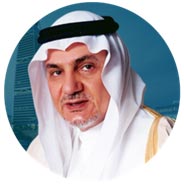
Speech by HRH Prince Turki Al Faisal
Chairman of the King Faisal Center for Research and Islamic Studies
To
Shaikh Ebrahim Bin Mohammed Al Khalifa Center for Culture and Research
Today’s Challenges to the Foundations of the Future
Kingdom of Bahrain
November 2026
Summary
Prince Turki argues that the Gulf Cooperation Council (GCC) countries face two major interconnected long-term challenges: demographic decline and the risks associated with artificial intelligence (AI).
- Demographic crisis: Falling birth rates across the Gulf, combined with increasing life expectancy, will lead to aging populations, smaller workforces, and greater pressure on pension systems, healthcare, and economic growth. Four of the six GCC countries already have fertility rates below replacement level.
- Artificial intelligence risks: While AI offers significant economic opportunities and can compensate for future labor shortages, it also threatens jobs, particularly those of young people and recent graduates. Other concerns include autonomous weapons, cyber vulnerabilities, deepfakes, and the misuse of AI by hostile groups.
- The connection between the two crises: The Gulf will increasingly depend on AI, robotics, and automation to compensate for a shrinking workforce. However, these technologies could simultaneously eliminate employment opportunities, creating economic and social challenges.
- Proposed solutions: The speech calls for greater cooperation among GCC countries through:
- Joint policies supporting families, childbirth, and childcare.
- Coordinated monitoring of demographic changes.
- Investment in AI, robotics, and workforce retraining.
- Developing local technological expertise and reducing dependence on foreign technology.
- Establishing a unified Gulf Council for AI governance, safety, and security.
Central message: The Gulf states must treat demographic change and artificial intelligence as strategic security and development issues, not simply economic or technological matters. Through coordinated regional policies, investment, and responsible regulation, they can turn these challenges into opportunities.
The speech concludes that cooperation among Gulf states is essential to protecting their future prosperity, security, and social stability, complementing national development strategies such as Saudi Arabia’s Vision 2030.
It is a pleasure to address you today in Muharraq, at the Shaikh Ebrahim bin Mohammed Al Khalifa Center for Culture and Research—an institution that bears the name of a man who believed that knowledge is the primary wellspring for a nation’s renaissance, and who viewed the study of major transformations in our region as both a scholarly mission and a national duty.
Our interconnected world, characterized by rapid technological and knowledge-based change, is in dire need of frank and open discussions regarding the challenges facing our peoples and our nations—especially at a time when our regional landscape is surrounded by hostility, subversive agendas, and even open warfare—manifested in the form of armed, regionally-backed coup-plotting groups; threats to international navigation in the Straits of Hormuz and Bab el-Mandeb; and missile and drone attacks against our territory and vital infrastructure. Underlying all of this are the hegemonic and expansionist ambitions of Iran and Israel—each pursuing its own methods to weaken our states and damage the social fabric of Arab societies as a whole.
This covers the overt war. Today, however, I wish to focus on a different kind of challenge—hidden challenges that lack a clear, identifiable enemy, yet whose impact on us, on the security of our nations, and on the sustainability of our development is—without exaggeration—no less significant than the effects of the wars I have just mentioned.I will focus specifically on two issues: the human crisis and the risks posed by artificial intelligence—two matters that, as I shall demonstrate, are organically interconnected.
The Human Crisis
Examining the Gulf Cooperation Council (GCC) states individually, we find that the Sultanate of Oman—which has the highest fertility rate within the Council—recorded approximately 2.5 births per woman, according to 2024 World Bank data. It is followed by Saudi Arabia at about 2.3, Bahrain at 1.8, Qatar at 1.7, Kuwait at 1.6, and the United Arab Emirates at approximately 1.2. In other words, four out of the six Gulf states have fallen below the replacement level of approximately 2.1 births per woman. Over the past few decades, the Gulf states have experienced a significant decline in fertility rates; if this trend continues, our societies will face profound demographic shifts, though the pace and intensity of these changes will vary from one country to another.
The decline in fertility is only the first part of the dilemma; the second is the aging process that looms over our societies, advancing toward us both silently and rapidly. While the Gulf region remains youthful, this current state is a temporary feature rather than a permanent one. As those born during periods of high fertility in past decades reach maturity—coupled with continued improvements in healthcare and rising life expectancy—our nations are heading toward a demographic transition characterized by an aging population and a fundamental shift in the age structure.Compounding this is a highly critical issue: the old-age dependency ratio. As the number of elderly individuals grows relative to the working-age population, the strain on the workforce, pension systems, and healthcare infrastructure will inevitably intensify.It is essential here to distinguish between demographic shifts among citizens and those within the total population, given the unique demographic composition of the Gulf Cooperation Council (GCC) states and the varying degrees to which their economies rely on expatriate labor.Behind these figures lies a reality we are heading toward—unless corrective action is taken—a demographic shift that will fundamentally alter the entire socio-economic system. This includes everything from family and tribal structures to pension and savings systems, real estate and consumer markets, and the mounting pressure on healthcare and long-term care services. Its impact will also extend to labor markets, the productivity of our economies, and our capacity to sustain rates of growth and prosperity.
The Artificial Intelligence Crisis
It is no exaggeration to say that the current evolution in artificial intelligence (AI) technologies represents one of the most significant technological shifts in human history, offering humanity countless benefits. From an economic perspective, a 2017 study by PricewaterhouseCoopers—conducted well before the current boom in generative AI—estimated that AI could add $15.7 trillion to the global economy by 2030, with the Middle East’s share of these gains potentially reaching approximately $320 billion.These early estimates reflect the scale of an economic transformation whose contours had begun to emerge years before the rapid developments we are witnessing today.
However, these benefits are accompanied by various risks; some studies estimate that approximately 300 million full-time jobs globally are at risk of being replaced by artificial intelligence, and that two-thirds of jobs in advanced economies are, to some extent, susceptible to its impact. The International Labour Organization has noted that clerical and administrative roles are among the positions most vulnerable to automation.
The International Monetary Fund has suggested that approximately 40% of jobs globally are susceptible to the impact of artificial intelligence. These include office and administrative roles, which currently absorb a large share of new graduates in our countries. This presents us with a dual challenge: leveraging the productivity gains offered by artificial intelligence, while ensuring that our economies remain capable of providing job opportunities for younger generations.
From a security perspective, there is a legitimate existential concern regarding what is known as “autonomous artificial intelligence”—systems capable of making complex decisions without human intervention. When it comes to financial, medical, or military systems that learn and evolve in ways that may surpass our ability to comprehend their behavior or hold them accountable, we shift from the question “What is technology doing to us?”—or how it influences our behavior, both individually and collectively—to a far more dangerous question: “What might these systems do on their own, without our knowledge?
Amid the intense competition among major powers and leading corporations to develop these systems, the danger lies not only in what the technology itself might do to us, but also in the possibility that the race to develop it could drive us to cross safety thresholds before we fully grasp or can control the associated risks. Consequently, cooperation among the nations leading in this field is no longer a diplomatic luxury; it has become a strategic necessity—ensuring that the rivalry for technological supremacy does not devolve into a race that leads us all toward the abyss. It is certainly not in humanity’s interest for any nation or company to achieve a level of technological dominance that comes at the cost of our collective ability to control that very technology.
Beyond the risks associated with the emergence of autonomous, non-human intelligence—which poses a challenge to humanity as a whole—there lies another equally dangerous dimension: the military and combat-related application of artificial intelligence. We have already witnessed how such threats have manifested in our own nations. Non-state armed groups are now able to leverage artificial intelligence to develop unmanned systems and low-cost combat capabilities. Reports concerning attempts to utilize AI models for the development of weaponry raise serious concerns about these capabilities falling into the hands of such armed groups—not to mention the broader empowerment of these groups. Regarding propaganda capabilities: the production of “deepfake” content has become accessible to any actor, enabling an adversary to sow chaos in public opinion within a matter of hours. There are countless examples of this—audio and visual clips disseminated by adversaries to stir confusion within our environment.
The Interplay of Challenges
At this point, I would like to pause for deeper reflection: the most dangerous aspect of the two scenarios I have outlined lies not in each one individually, but in the connection and synergy between them.
Population and workforce growth have been primary drivers of economic expansion in the Gulf for half a century. As our societies begin to age—and as global competition for migrant labor intensifies due to demographic shifts in many nations—artificial intelligence, automation, and robotics will become essential pillars for sustaining prosperity, alongside efforts to boost productivity and develop human capital meaning that risks of a human-capital decline will amplify our need for artificial intelligence; yet, while this technology serves as a vital solution, it also carries numerous risks.
Here lies a paradox worth contemplating: we require artificial intelligence to compensate for an anticipated labor shortage, even as its expanded adoption threatens to shrink job opportunities—particularly for young people and recent graduates. We may soon face two simultaneous challenges: technological unemployment in certain sectors today, and a labor shortage coupled with an increased dependency burden tomorrow. This compels us to avoid viewing these human and technological shifts in isolation; instead, we must address them through a unified vision for the future of the labor market, the economy, and society as a whole.
In addition to the risks of artificial intelligence already mentioned, an expanding reliance on this technology will create numerous security vulnerabilities for our societies. Some of these risks—such as the “robot uprisings” often depicted in science fiction—may still be perceived as mere fantasy, while others are very real and tangible, most notably the multiplication of entry points for hostile intelligence infiltration. Furthermore, an increasing dependence on this technology could give rise to new strategic challenges, particularly concerning critical infrastructure and sensitive systems. This makes the development of national and Gulf-wide capabilities—focused on the advancement, governance, and security of these technologies—a matter of paramount importance.
Addressing the Two Challenges
There is an urgent need to address these two interconnected challenges.
In the Gulf Cooperation Council (GCC) countries, we are fortunate to have various programs focused on quality of life, as well as child and family welfare. These should be viewed as strategic initiatives rather than mere incremental improvements.
For instance, the “Quality of Life” program in the Kingdom of Saudi Arabia, along with various family and housing support platforms; the Supreme Council for Motherhood and Childhood in the United Arab Emirates; and the work-life balance initiatives across the GCC—all provide a solid foundation for establishing a Gulf-wide alliance for motherhood, parenthood, and childhood. This reality should be approached as a joint endeavor for collective protection. Such cooperation must extend to addressing the economic and social factors that influence decisions regarding family formation and childbearing—ranging from the costs of housing and childcare to the balance between work and family life—while simultaneously implementing policies that respond to the growing elderly population and their specific needs.
It is essential, therefore, to establish a joint Gulf effort to monitor demographic shifts and anticipate their long-term consequences. Such an initiative should distinguish between citizens and residents, while examining the interconnections among fertility rates, aging, migration, and labor markets. We cannot address a challenge with implications spanning decades through short-term policies, nor can we proactively manage its effects without a precise understanding of the underlying trends and the variations that exist across our respective nations. This collaboration would provide a scientific foundation for family, social, and economic policies, and enable our countries to learn from one another’s experiences.
Furthermore, we in the Arab Gulf states are mindful of the risks posed by unconstrained artificial intelligence and its potential for destructive use. There is an urgent need to intensify the coordination of our efforts and to work collectively across several areas, including:
Coordinating and collaborating on the large-scale deployment of robots and automated systems in high-risk or labor-intensive sectors—ranging from manufacturing, supply chains, and construction to healthcare and services. This can be achieved through shared policies and the exchange of expertise and lessons learned, helping to offset the anticipated decline in human labor while mitigating the risks associated with such an expansion.
Currently, there are extensive initiatives underway across the Gulf regarding robotics and automated systems. The United Arab Emirates, for instance, has launched the “Dubai Robotics and Automation Program,” which aims to support the deployment of 200,000 robots by 2032 to enhance efficiency and productivity within the service, industrial, and logistics sectors.
The Kingdom of Saudi Arabia has incorporated artificial intelligence and smart systems into its national agendas, with extensive investments aimed at developing advanced technical capabilities. Projects such as “NEOM” and the company “HUMAIN” (or similar initiatives) serve as examples of this drive toward adopting advanced technologies and building national capacity in artificial intelligence. What is required now is intensified coordination in this area, for the benefit and protection of us all.
This coordination must also extend to identifying sectors where the expansion of automation would positively impact productivity and help address labor shortages, as well as those where it might lead to the displacement of large numbers of workers—particularly young people and recent graduates. This necessitates aligning technology policies with strategies for education, professional training, and employment.
Furthermore, joint programs should be established to retrain the workforce and develop the skills that our economies will require in the future. It would be counterproductive to address an anticipated human-resource challenge by creating new social and economic problems.
Moreover, the expansion of robotics and intelligent systems necessitates Gulf-wide cooperation in research and development, as well as in the testing and safety assessment of these systems prior to their deployment. It is also essential to build local capacity for their operation, maintenance, and further development, ensuring that our reliance on such technologies does not translate into a total dependence on external sources—particularly in vital sectors that affect our security and our economies.
Furthermore, there is an urgent need to redouble existing efforts toward establishing a Gulf framework for the governance of artificial intelligence (AI) risks and the deployment of robotics. This includes developing proactive mechanisms to address potential future threats, such as by deepening cooperation on safety-related protocols.
Gulf Cooperation Council (GCC) member states can learn from one another in this domain. For instance, the Saudi Data and Artificial Intelligence Authority (SDAIA) in the Kingdom of Saudi Arabia has issued a set of AI ethics principles, as well as a national framework for AI risk management—covering the identification, assessment, mitigation, and monitoring of risks—to promote the responsible and secure use of this technology. Additionally, the Kingdom collaborates with international organizations on AI ethics and is actively working to cultivate local talent and raise awareness regarding the risks associated with this technology and its responsible application.
Other Gulf states have also undertaken similar initiatives and efforts to develop strategies and governance frameworks for artificial intelligence.
These efforts should be integrated and mutually reinforcing, leading to the establishment of a unified Gulf council for AI governance. Such a body would regulate sensitive applications, protect citizens’ data, and deepen cooperation to ensure the safe deployment of these technologies.
In essence, we need to strengthen joint Gulf mechanisms to address risks that transcend national borders. The council’s mandate would include setting common standards for high-risk systems, sharing information regarding vulnerabilities and security incidents, coordinating safety testing for autonomous systems, and developing mechanisms for a collective response should critical infrastructure or vital services in any of our nations be compromised or disrupted due to these technologies.
It could also undertake the coordination of Gulf positions within international forums concerned with artificial intelligence governance, ensuring that the member states of the Council have a collective voice in shaping the rules and standards that will impact their security and interests.
This highlights the responsibility of nations at the forefront of artificial intelligence development. Just as our own states need to coordinate on the deployment of these technologies and the protection of their societies from associated risks, humanity as a whole requires international cooperation to ensure that the race to develop increasingly powerful systems does not cross the boundaries of safety and human control. Given their capabilities, investments, and international relations, the Gulf states have a direct interest in promoting such cooperation and participating in the formulation of its rules, rather than merely being passive recipients of the outcomes.
In the Gulf states, thanks to the wisdom of our leadership, the maturity of our people, our capacity for swift decision-making, and our abundant resources, we are better positioned than others to pursue a dual approach: proactive regulation and transformative investment. This strategy is essential for addressing both the contraction of the human workforce and the risks posed by artificial intelligence—but we must redouble our efforts, starting today.
Distinguished guests,
Even amidst the current conflict, the Gulf states do not view the future through a lens of fear, but rather as a realm of opportunity. Development—as emphasized by the Kingdom of Saudi Arabia’s Vision 2030 and similar visions across the other Gulf Cooperation Council (GCC) states—serves as the cornerstone of security and a vital tool for confronting the latent crises looming on the horizon. However, managing the two challenges I have highlighted exceeds the capacity of any single nation; this renders coordination among the Gulf states—in shaping policies related to human capital and technology—a strategic necessity, not a luxury.
Thank you all.